
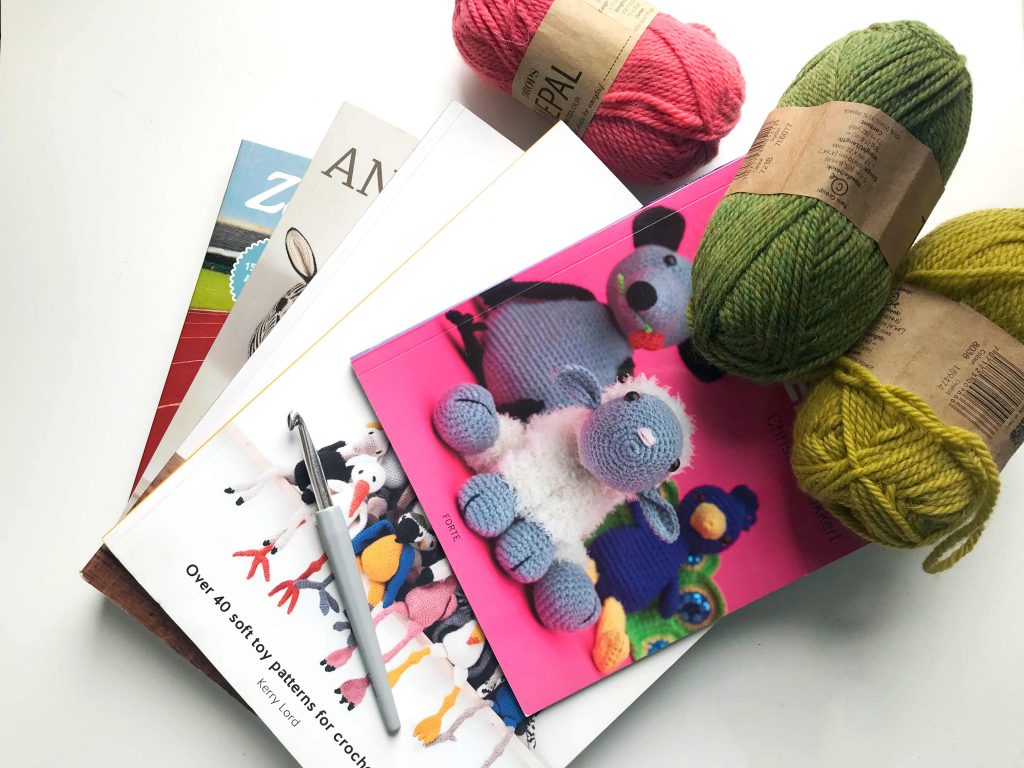
Amigurumi’s can look very tempting to create… but when you are new to crochet, how do you get to a good start with it?
My first attempt to creating an Amigurumi was a bit of a disaster and I even quitted the whole idea of it for a while. I had wanted to crochet a cute little bunny and after many hours I ended up with 2 ears of different sizes… Not a good start!
Meanwhile, I learned a lot and created many different animals. It is fun to do while watching a movie. And with 4 basic principles, I also taught a couple of my friends, who got stuck, how to do it.
My 4 basic principles that will help you crocheting amigurumis:
- Use yarn that is easy to crochet with
To start I would recommend yarn for needle size 5 mm (or more). A bigger size of yarn will simply improve the visibility of individual stitches. Further, use yarn that is smooth. Very fluffy yarn is just more difficult to crochet with. My favorite yarn to use for amigurumis is Drops Nepal (unicolour or mix): it is suited for a 5 mm crochet needle, it is a smooth yarn and it is available in quite an amount of nice colours. A couple of times I crocheted more than 1 animal from the same book, and using the same brand gives the effect that those creatures look like a bunch of good friends. - Use a contrasting thread to mark the first stitch in each row
This will help you identifying when a row is finished and in addition, in case you made a mistake, to help you pulling back the round to your marker. You simply cannot go further than the marker so it helps you to pull back not more than just 1 row, if needed.
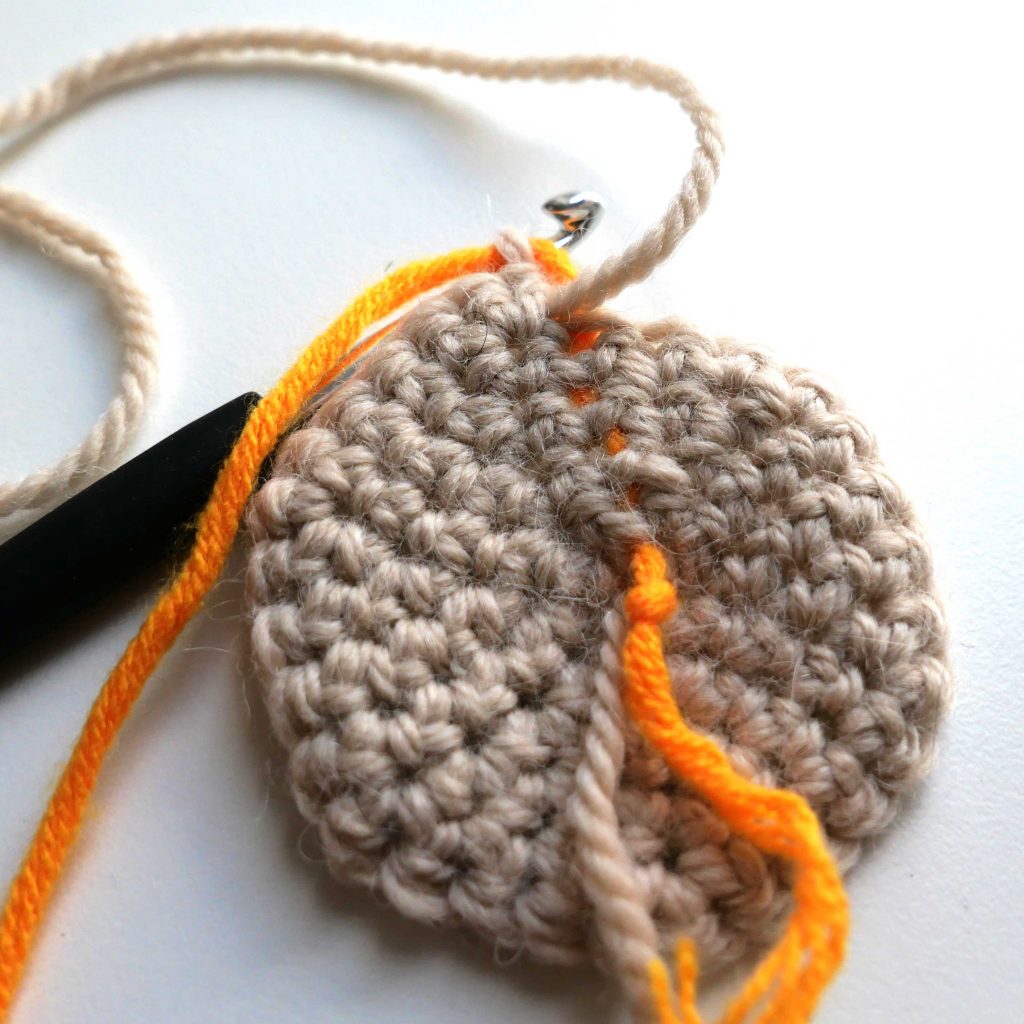
3. Count, count, count…..
This is, together with using a contrasting thread in the 1st stitch, what will ensure you can follow the pattern well. If, at the end of a row, you encounter that the amount of stitches you made do not match with the right number as stated in the pattern description, just pull back the round until the marker and rework it. For example, in case you would need to end up a row with (dc2), 3dc but ended with (dc2), 2dc, you know that you will need to rework it.
4. Learn how to create a chain, a foundation ring, double crochet, increase and decrease
These are the most commonly used stitches for Amigurumis. There will be more complex Amigurumis with other type of stitches out there but knowing how to do these is a good start for your first amigurumi.